Spectra Assure Free Trial
Get your 14-day free trial of Spectra Assure for Software Supply Chain Security
Get Free TrialMore about Spectra Assure Free TrialIt’s no secret that modern application development relies heavily on open-source software. What is catching up is how software teams secure it.
For most developers, maintainers, and application security teams, open source security has become a daily reality. You are pulling in dependencies to move faster, ship features, and avoid reinventing the wheel. At the same time, attackers are doing the exact same math. They know that if they compromise one package, one maintainer account, or one publishing token, the blast radius can spread fast and wide across the software ecosystem.
The ReversingLabs Software Supply Chain Security Report 2026 found an expansion of the open source threat landscape. RL documented a 73 percent increase in malicious open-source packages over the past year, with attackers distributing more than 10,000 malicious packages exclusively on npm alone.
In addition to the expansion of the threats, there was also an escalation in the sophistication of attacks. The Shai-hulud attack, for example, exemplified how registry-native malware can weaponize compromised credentials to propagate across ecosystems at unprecedented scale — a single compromised component can proliferate rapidly, and affect thousands of developers within 24 hours
The open source maintainer community has also been under attack. RL built Spectra Assure Community to give back to the people who build and maintain the software everyone depends on. Not every open source maintainer has the budget, team, or tooling of a large enterprise. But small projects are often anything but small in impact. One overlooked package can sit deep inside thousands of applications. One compromised component can ripple outward in hours.
Spectra Assure Community was designed to help developers, maintainers, contributors, and AppSec teams make better decisions about the software they use and ship.
[ Sign up for free: Spectra Assure Community ]
A lot of open source security conversations still center on what large organizations need. That matters — but it’s only part of the picture.
The software supply chain is held together by maintainers, individual contributors, understaffed package repositories, platform teams, and developers — all just trying to do the right thing under a variety of constraints. In many ecosystems, the people protecting these projects are working with not only limited time, but also limited resources. This is the security gap where attackers thrive.
Spectra Assure Community was built with these realities in mind. It is not about creating another vanity project or a shiny dashboard that looks good in a launch post. It’s about providing actionable insights and usable security intelligence that helps people catch problems early, understand risk faster — and stay ahead of compromises without an enterprise budget.
Open source attacks are not just theory anymore. Maintainer account takeovers, exposed publishing credentials, typosquatting, malicious updates, and dependency hijacking have made it clear that the software supply chain is one of the most vulnerable surfaces in modern development.
And the challenge is getting harder. Attackers are getting more creative. Malware is showing up in places that are harder to inspect. Obfuscation is becoming more common. AI-assisted coding makes it cheaper and easier to rewrite malicious code in ways that can evade shallow detection techniques. That means that developers need better visibility, not more noise. They need signals that are timely, actionable, and grounded in how software is actually built and shipped.
We did not build Spectra Assure Community to be another check-the-box scanner. We built it to help answer a much more practical question: Can I trust this package enough to use it, update it, or ship it?
That means looking beyond a single issue type or a one-dimensional pass/fail label. Spectra Assure Community evaluates software risk across multiple categories that map to real-world exposure, including vulnerabilities, hardening, secrets exposure, malware, tampering, and broader supply chain integrity signals. Instead of forcing users to stitch together fragmented tools and disconnected results, the goal is to provide a more complete picture of package health and risk.
It is also designed to be flexible. Some users want to focus on malware. Others care about development secrets exposures, package tampering, or hardening signals. Spectra Assure Community is built so that teams can tailor the experience to what matters most in their environment, rather than hiding useful controls behind a paywall or forcing a single rigid model on every team.
The best security tooling is the kind that helps — without derailing how teams work. RL gets that. Developers don’t need another system that only shows up after the damage is done. They need the insight earlier in the workflow, where decisions about dependencies are actually being made.
That’s why Spectra Assure Community plugs into places where developers already live: IDEs, pre-commit checks, CI/CD pipelines, artifact storage, and the broader build process. The closer security is to the moment a dependency is introduced, updated, or published, the more useful it becomes.
This matters even more when you consider the scale of the problem. Tens of thousands of packages are published across major ecosystems every day. No maintainer, repo admin, or AppSec team can manually review that volume. Automated analysis is not optional anymore. It is the only way to keep up.
When development teams hear “security scanner,” they think “more work.” And that reaction is reasonable. Too many tools generate noise, create context switching, and dump findings on the software engineering team without helping them to decide what matters now, or help prioritize
RL thinks about security controls differently. Good security intelligence should reduce work — not create work. It should help teams prevent incidents before they turn into an all-hands-on-deck fire drill, because once an incident happens, everything gets more complicated, releases pause, team scrambles, and users need answers. Worst of all, decisions are made under pressure. Preventing that kind of chaos is far more valuable than adding another backlog of generic warnings.
That is the kind of signal RL designed the Spectra Assure Community to provide. If a package publishes a new version your team did not expect, that should stand out. If a dependency exposes a publishing token, that should not wait until after an incident review. If a package has meaningful security issues but low real-world impact, teams should have the context to prioritize accordingly.
The point is not to overwhelm people. The point is to help them act earlier and smarter.
One thing the team wanted to be very clear about: This is not a bait-and-switch — and it is not a hobby project dressed up as community. Spectra Assure Community is a meaningful part of a broader vision for software supply chain security. It is intended to be useful on its own, and it is being built to grow with the people who use it.
The long-term goal is not just consumption, but participation — a place where users can benefit from the intelligence, provide feedback, report problems, and help strengthen the ecosystem over time.
The community piece matters. Open source security does not improve just because one company publishes a tool and walks away. It gets better when maintainers, developers, repository teams, and security practitioners can work from better information and contribute back into the systems that protect the ecosystem. Spectra Assure Community is part of that effort.
There are a lot of tools in this space, and developers should be skeptical of broad claims. We believe what sets Spectra Assure Community apart is the depth of analysis and ability to inspect software beyond surface-level metadata that comes with RL’s AI-driven binary analysis. Threats are increasingly found not only in source code but in compiled code, obfuscated logic, and other places that require deeper binary analysis to understand what is actually happening. That matters across ecosystems, whether compiled Python bytecode, .NET packages, or other formats where shallow inspection is not enough.
Just as important, the work does not happen in isolation. The data and findings also support broader ecosystem efforts, including contributions back to industry initiatives focused on identifying malicious packages and improving open source security outcomes.
What comes next? Like wine, we aim to get better with age. That means broader ecosystem coverage, better workflows, more useful notifications — and more places to surface data developers and AppSec teams need, whether that is in the IDE, in the CI/CD, or in the systems they already rely on to build and ship software.
It also means continuing to listen to the people this was built for. What developers do not need is more abstract security advice. Maintainers do not need guilt without support. AppSec teams do not need another silo. What they all need is practical, timely, adaptable security intelligence that helps them protect software before problems spread downstream.
Most open source contributors lack the financial resources or organizational backing to purchase enterprise-grade security solutions. Large-scale software projects depend extensively on these individual community contributions. When threat actors compromise a specialized library, the impact propagates upstream to major commercial applications across multiple industries.
RL’s mission focuses on protecting these foundational projects through comprehensive security coverage. Spectra Assure Community provides a complete security solution tailored for individual practitioners and small development teams — complete with the analytical capabilities to identify secure components, and make informed decisions regarding dependency upgrades and integrations. By securing individual contributors, we strengthen the whole software supply chain infrastructure.
RL deliberately focuses on practical security solutions rather than theoretical approaches that offer limited real-world application. Spectra Assure Community functions as a first-class product within RL’s comprehensive security portfolio. The platform delivers real-time threat intelligence without restricting critical capabilities behind premium access barriers. Developers can customize the analytical insights to match their specific security requirements. You can configure the system to focus exclusively on malware detection — or expand the scope to include comprehensive application hardening recommendations.
Threat actors continuously evolve their attack methodologies to circumvent standard security defenses. The integration of artificial intelligence enables attackers to rewrite malicious code using countless variations and obfuscation techniques. This evolution renders traditional signature-based detection methods obsolete for contemporary development environments.
Spectra Assure Community leverages sophisticated binary analysis technology to identify hidden threats across multiple attack vectors. Our threat research team consistently discovers industry-first attack patterns and emerging threat behaviors. Threat actors now conceal malware within compiled Python bytecode, requiring advanced decompilation capabilities to analyze the underlying malicious logic. Our platform executes this complex binary analysis with high accuracy and comprehensive coverage. We apply similar deep inspection methodologies to evaluate .NET code embedded within NuGet packages.
The platform evaluates security risks across six distinct categories: vulnerabilities, application hardening, secrets exposure, malware detection, tampering and supply chain integrity. Developers receive comprehensive software safety reports for every dependency within their project ecosystem. You can measure these risk factors programmatically with each software release cycle. This approach provides prioritized visibility into the specific nature of identified threats. When an open source package inadvertently exposes a publishing token, our system flags the incident immediately, enabling you to halt the build process and remediate the security issue safely.
Security tools frequently frustrate developers by generating excessive alert noise and disrupting established development workflows. We designed Spectra Assure Community to integrate seamlessly into your existing development toolchain without workflow disruption. The platform prioritizes fast execution, high analytical accuracy and minimal false positive rates.
Developers can access actionable security insights directly within their preferred development environments. The platform integrates into the earliest stages of the development lifecycle, enabling security analysis within IDEs, during pre-commit validation checks, inside CI/CD pipeline execution and across artifact storage repositories.
Our system continuously monitors the substantial daily volume of open source package publications. With approximately 30,000 packages published daily across major repositories, automated algorithmic analysis becomes essential for comprehensive coverage. The community platform functions as your centralized security notification system. You receive immediate alerts when unauthorized users publish new versions of packages you maintain. You also gain visibility into critical vulnerabilities affecting your current dependency implementations.
Many developers perceive security scanners as tools that generate additional workload without providing substantial value. RL approaches software security from a fundamentally different perspective — focusing on prevention rather than reactive remediation. Spectra Assure Community exists to prevent security incidents — and reduce your overall operational workload over time.
When security incidents occur, software engineering teams face substantial pressure to execute emergency remediation procedures. They must suspend planned feature development to address vulnerabilities, apply system patches and communicate with affected users. Few development teams can execute these emergency procedures flawlessly under intense operational pressure.
Investing development time in proactive security validation helps you avoid these substantial operational disruptions entirely. By validating third-party dependencies before integration, you maintain comprehensive control over your build environment and deployment pipeline. Spectra Assure Community’s free tier provides the analytical tools necessary to ship secure software with confidence.
Spectra Assure Community is designed for individual developers and maintainers to understand the risks within open-source packages and version updates. It brings RL’s enterprise-class threat detection to open-source software (without the enterprise price tag), while translating the findings into clear pass/fail signals to simplify decision making. With Community, development teams stay focused on building features and fast delivery, while gaining an always-on open-source reviewer with the threat detection expertise to help protect your credentials, code — and company — from supply chain attacks.
Spectra Assure Community+ has the same analysis and reporting features as the free Community plan, but the difference is that it unlocks much higher data access volumes for those integrating vetting of open source earlier and more often into the SDLC. It is designed for developers working on integration projects who want to automate open-source protections in their pipelines, as such:
RL built Spectra Assure Community because open source is foundational to modern development, because the people maintaining that foundation deserve better support — and because securing the software supply chain should not be limited to teams that can afford the most expensive tools.
Traditional security assessment methodologies rely on manual processes, operate in isolated environments and depend heavily on third-party security attestations. Spectra Assure Community provides comprehensive visibility without requiring access to proprietary source code repositories. The platform performs thorough binary analysis to detect malicious code implementations, tampering attempts and exposed developer credentials.
Yes. You can implement policy-based security decisions to maintain consistent security standards efficiently across your development pipeline. The platform integrates seamlessly into popular CI/CD systems including Jenkins, GitLab CI and GitHub Actions. This integration enables your development team to automatically block compromised dependencies before they enter your production environment.
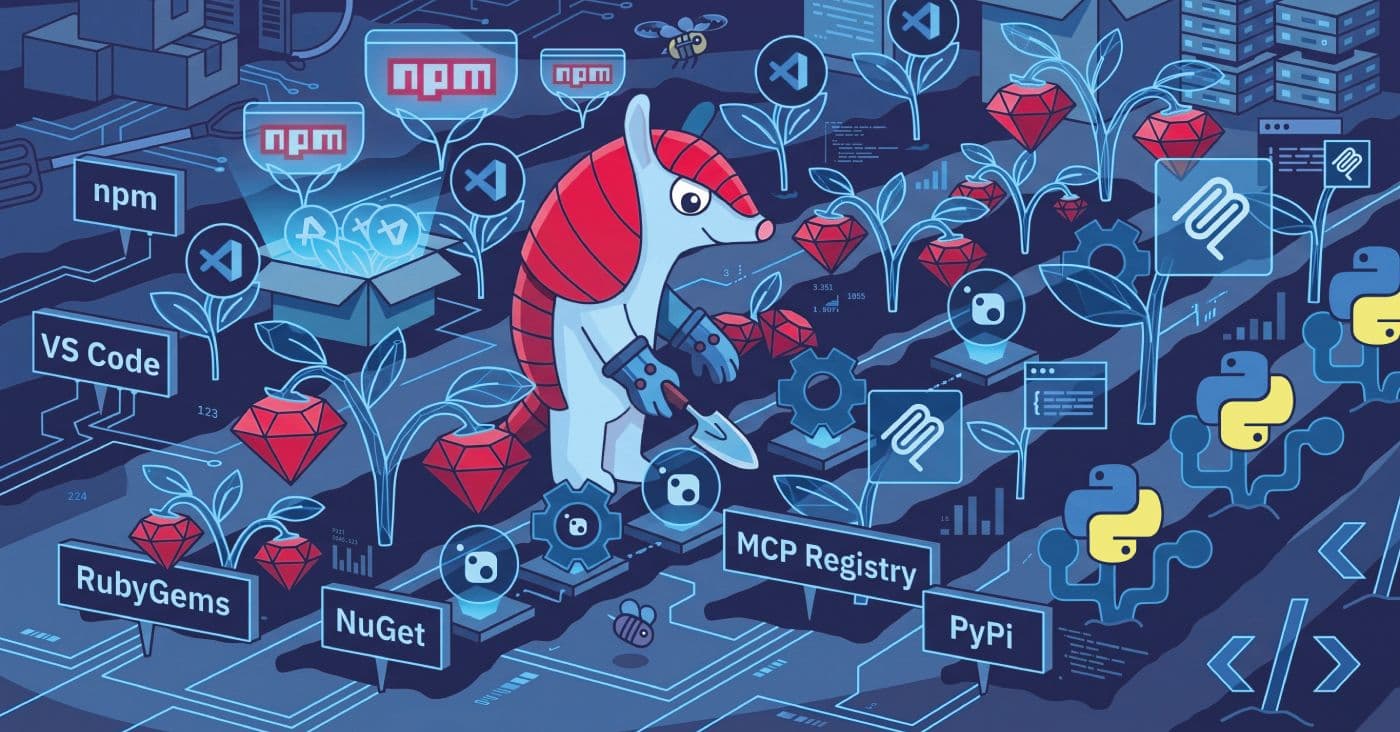
We continuously expand our coverage to protect the most widely utilized package management systems. The platform currently monitors extensive ecosystems including npm, PyPI, RubyGems and NuGet repositories. Our analytical tools support ecosystems surrounding JavaScript, Python, Java and Go programming languages, ensuring your development team has access to secure building components.
Learn more in our LinkedIn Live session about taking control of your application security infrastructure today. Sign up for Spectra Assure Community and start analyzing your dependencies.

Explore RL's Spectra suite: Spectra Assure for software supply chain security, Spectra Detect for scalable file analysis, Spectra Analyze for malware analysis and threat hunting, and Spectra Intelligence for reputation data and intelligence.
-1400x732.jpg&w=3840&q=75)
Post-quantum readiness depends on knowing where cryptography lives in the software you run, and a list of components can't tell you that.

ReversingLabs identified and classified the malware weeks before the report was published — showing why behavioral intelligence and historical telemetry matter in the AI age.
With this integration, Rubrik users can now tap ReversingLabs' ransomware feed to decide whether each file in their backup is safe.